Local SEO6 min read
Local Rank Tracking: A Practical Guide for Local Business Owners
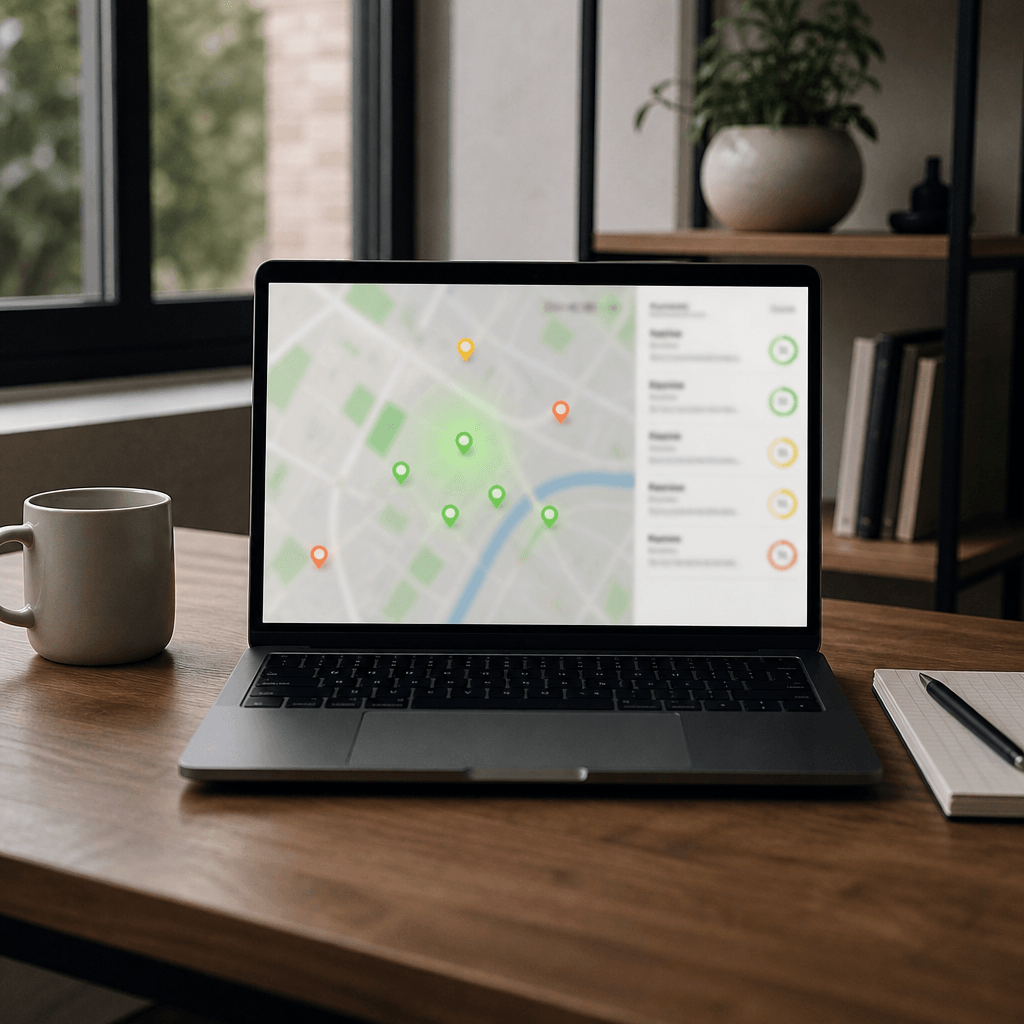
Local rank tracking shows where a business appears when people search for nearby products or services. It can reveal whether your Google Business Profile, website, reviews, and other local marketing work are helping people find you.
For a local owner, this information needs to be practical. A report filled with changing numbers is not very useful unless it helps answer real questions: Are we visible in the neighborhoods we serve? Which services are gaining attention? Did a profile update help? Are competitors appearing where we should be?
Local search results vary by location, device, search wording, and time. That is why rank tracking should be treated as a regular measurement process rather than a one-time score.
What does local rank tracking measure?
Local rank tracking measures where your business appears for selected searches in a defined area. Those searches may produce standard organic results, the local map results, or both.
For example, a plumber might track searches such as emergency plumber, water heater repair, or plumber near me. An HVAC company could monitor air conditioning repair, furnace service, or heat pump installation. An auto repair shop may track brake repair, oil change, or check engine light service.
The important detail is the search location. A business may rank well near its address and poorly several miles away. A single search performed from an owner’s office cannot describe the whole service area. Good tracking checks several points that reflect the communities where customers actually live and search.
Why can local rankings change from one street to the next?
Google uses proximity as one factor in local results. The same business can appear first near its location, lower in another neighborhood, and outside the visible results farther away. This pattern is normal, especially for businesses serving a wide area.
Other factors affect the results too. Relevance matters because the business profile and website need to clearly match the search. Prominence is influenced by signals such as reviews, mentions, and the overall strength of the business presence online. Competition also changes by service and location.
Searchers may see different results because they use different devices, have different location settings, or search with slightly different wording. Rank tracking cannot remove this variation. It can organize it so you can identify patterns instead of relying on one personal search.
Which keywords should a local business track?
Start with the searches that connect most directly to revenue. A short, carefully selected list is more useful than hundreds of loosely related phrases.
- Core service searches: Track the main service a customer is likely to request, such as HVAC repair or brake repair.
- Urgent searches: Include high-intent phrases such as emergency plumber or same-day auto repair when those searches match the business.
- Service and location searches: Use combinations such as furnace repair in a specific community, where that wording reflects how local customers search.
- Category variations: Include common terms people use for the same need. Customers may search for air conditioning service, AC repair, or cooling repair.
- Brand searches: Monitor the business name and close variations to confirm that customers can find the correct profile.
Do not add a keyword simply because it receives attention in a keyword tool. Ask whether the business actually provides the service and serves the location. Tracking irrelevant phrases can make a report look busy while hiding the searches that matter.
How should you choose locations for tracking?
Use a mix of points that represent the business’s real customer base. One point can be near the business address. Additional points can cover important neighborhoods, nearby towns, and the outer edge of the normal service area.
For a business serving one town, a small grid around the address may be enough. For a service-area business, tracking points should reflect where crews or technicians regularly work. Keep the points consistent from month to month so changes are easier to interpret.
Location tracking also helps identify unrealistic expectations. If visibility is strong close to the business but weak at the edge of the service area, that may be a geographic pattern rather than a sudden marketing failure. The response could involve clearer service-area information, stronger location-specific content, or a review of which areas are commercially important.
What should you record besides ranking position?
Rank position is only one part of local visibility. A useful tracking process records the context around that position.
- Map visibility: Record whether the business appears in the local map results and how often it appears across tracking points.
- Organic visibility: Check whether the website appears below the map results for important searches.
- Competitor presence: Note which competitors appear repeatedly in the same areas and for the same services.
- Profile actions: Review calls, website visits, direction requests, and other available actions from the Google Business Profile.
- Review activity: Track review volume, recent activity, and recurring customer comments.
- Business changes: Record updates such as new services, altered hours, new photos, profile edits, or website changes.
These details help explain movement. A ranking change without a change in calls may have limited business impact. A modest visibility increase accompanied by more direction requests may deserve more attention.
How often should local rankings be checked?
Most local businesses benefit from a monthly review, with more frequent checks when a major change or problem is being investigated. Weekly data can help identify trends, but daily movement often creates unnecessary noise.
For a new Google Business Profile, a recent service-area change, or a sudden visibility drop, checking more often for a short period can be useful. Once the situation is understood, return to a consistent schedule.
Compare similar periods whenever possible. Seasonal demand affects plumbers, HVAC companies, and auto repair shops in different ways. A winter comparison may tell you more than a comparison with the previous month. Keep notes about promotions, weather, staffing, service changes, and unusual events that may influence demand.
What does a useful monthly review look like?
Set aside time to review the data in a fixed order. This keeps the conversation focused on decisions.
- Check visibility by area: Look for neighborhoods where the business improved, declined, or remained steady.
- Review important services: Identify which service searches gained visibility and which need attention.
- Compare competitors: Look for competitors entering areas or searches where they were previously absent.
- Review profile activity: Compare calls, website visits, direction requests, and review activity with the ranking pattern.
- Inspect recent changes: Connect movement with profile edits, website updates, new photos, review responses, or other completed work.
- Choose a small number of actions: Assign the next steps, such as improving a service page, correcting business information, or strengthening the review request process.
A short action list usually beats a long list of possible improvements. Select work based on customer value, visibility gaps, and the services the business most needs to promote.
What should you do when rankings drop?
First, confirm that the drop is consistent. Check several tracking points, related keywords, and both map and organic results. A single keyword in one location does not provide enough evidence.
Next, look for technical or profile issues. Confirm that the business information is accurate, the profile is not marked as suspended, the primary category still fits, and important services are represented clearly. Review recent changes to the website and Google Business Profile.
Then check competitors and customer signals. A competitor may have added relevant information, earned a steady stream of reviews, or become more prominent in a particular neighborhood. Review patterns can also reveal questions or service terms that deserve clearer coverage on the profile or website.
A ranking decline is a reason to investigate, not a reason to make random edits. Change one or two well-supported items, record what changed, and allow enough time to evaluate the result.
How can local rank tracking support better marketing decisions?
Rank tracking helps connect local search work with the way customers find a business. It can guide Google Business Profile optimization, website content priorities, review follow-up, and local SEO planning.
For example, if a company ranks well for its main service but poorly for a profitable secondary service, that gap may justify a clearer service page and better profile coverage. If visibility is strong but calls remain low, the issue may involve the offer, page content, business hours, or customer confidence rather than ranking alone.
GMB Done Right provides Marketing support for local businesses interested in Google Business Profile management, Google Maps ranking, local SEO services, and local rank tracking. Learn more at gmb-doneright.com.